

VCM thought leadership
Why 82% of SMEs now see AI as "essential for survival", but most still aren't ready
You're scrolling through LinkedIn at 11 PM (again), seeing another competitor announce their "AI transformation success story." Your stomach drops. The thought hits you: Are we falling behind?
If you're an owner-manager running an SME, you're not alone in this feeling. Recent studies show that a staggering 82% of small and medium enterprises now view AI as essential for business survival. But here's the kicker, most of them aren't actually ready to implement it successfully.
Sound familiar? Let's unpack this paradox and, more importantly, figure out how to bridge that gap.
The Owner-Manager's AI Dilemma
Running a business with 10-250 employees means you're constantly juggling priorities. Cash flow, staff management, compliance, customer demands, and now, apparently, becoming an AI expert too. It's no wonder you feel overwhelmed.

The reality is stark: while 87% of large enterprises (10,000+ employees) have adopted AI solutions, only 34% of small businesses have made the leap. This isn't because SME owners don't "get it", they absolutely do. They see competitors streamlining operations, reducing costs, and improving customer service with AI tools. They know staying competitive means embracing these technologies.
But knowing and doing are two very different things when you're managing payroll, chasing invoices, and trying to keep your best people from leaving for bigger companies.
Why SMEs Recognize AI as Essential
The writing is on the wall, and it's written in code. Here's what's driving this widespread recognition:
Competitive pressure is real. Your competitors are using AI for everything from customer service chatbots to predictive inventory management. They're operating more efficiently, responding faster, and often undercutting prices because their operational costs are lower.
Customer expectations have shifted. Your clients now expect 24/7 support, instant responses, and personalized experiences, the kind that's practically impossible without some level of automation.
Operational inefficiencies are becoming expensive. Manual processes that were "fine" five years ago now feel painfully slow and error-prone. Every hour spent on repetitive tasks is an hour not spent growing the business.
Market volatility demands agility. AI helps businesses predict trends, adapt quickly to changes, and make data-driven decisions faster than intuition alone allows.
The Brutal Reality: Why Most SMEs Aren't Ready
Here's where it gets tough. Recognizing the need for AI and actually implementing it successfully are worlds apart. The barriers are real, and they're significant:
Financial Constraints Hit Hardest
Let's talk money, because that's often where the conversation stops. Research shows that 40% of SMEs cite maintenance costs as their biggest barrier to AI adoption. It's not just the upfront investment; it's the ongoing expenses that keep business owners awake at night.
Hardware costs affect 32% of SMEs, while training expenses worry another 24%. When you're running tight margins and every pound matters, these aren't small considerations, they're business-critical decisions.
The Knowledge Gap Is Real
Here's a question we hear constantly: "How do I even begin to understand what AI solution is right for my business?"
39% of SMEs report lacking the time for proper training. When you're wearing multiple hats as an owner-manager, finding weeks to learn about AI implementation isn't realistic. You need solutions that work without requiring you to become a tech expert overnight.
Security Concerns Keep You Up at Night
This one's alarming: 72% of SMEs have inadequate digital security measures. Nearly one-third experienced a security breach in the past year, double the rate from 2024. Some businesses (9%) have no security measures at all.
Jumping straight into AI without proper digital foundations isn't just risky, it's potentially catastrophic.

Generic Solutions Don't Fit Real Business Needs
Here's the frustrating part: 27% of businesses that are aware of digital support programs report that available solutions weren't adapted to their actual needs.
Cookie-cutter AI tools designed for massive enterprises rarely translate well to the nuanced needs of smaller businesses. You need solutions that understand your industry, your size constraints, and your specific operational challenges.
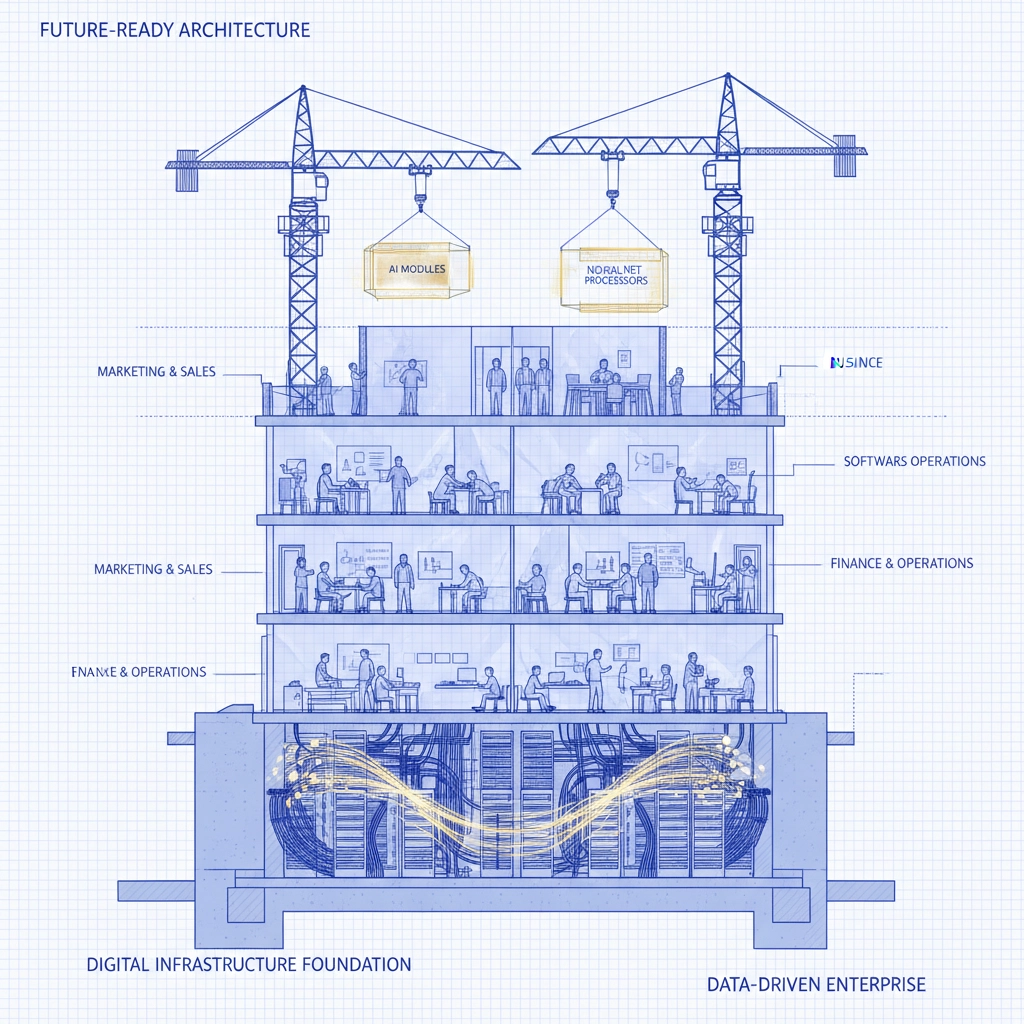
The Digitalisation-First Approach: Building Proper Foundations
Before you can run with AI, you need to walk with digital transformation. This isn't about being cautious, it's about being strategic.
Think of it this way: trying to implement AI on shaky digital foundations is like building a smart home on unstable foundations. Sure, you might get some features working, but the whole system becomes unreliable and expensive to maintain.
Start With Data Infrastructure
AI is only as good as the data you feed it. If your business information lives in spreadsheets, paper files, and different people's heads, no AI solution will help you.
We work with businesses to establish proper data collection, storage, and management systems first. This might sound boring compared to flashy AI capabilities, but it's absolutely essential.
Secure Your Digital Environment
Remember those security statistics? Before introducing AI tools that will access your business data, you need robust cybersecurity measures. This includes everything from proper backup systems to employee training on digital security practices.
Establish Clear Processes
AI works best when it's automating well-defined, consistent processes. If your current workflows are ad-hoc or poorly documented, AI will just amplify the confusion rather than solve it.
How VCM Helps SMEs Become "AI Ready"
We've worked with dozens of owner-managed businesses facing this exact challenge. Here's our approach:
Assessment Before Action
We don't start with AI recommendations. We start by understanding where your business really stands digitally. What systems are you using? How is data flowing through your organization? What are your biggest operational pain points?
This assessment reveals whether you're ready for AI implementation or need to focus on digital foundations first.
Phased Implementation Strategy
Rather than overwhelming you with comprehensive AI transformation, we create staged rollouts that match your capacity and budget. Maybe we start with automated customer communications, then move to inventory management, then explore predictive analytics.
Each phase builds on the previous one, creating sustainable growth rather than disruptive change.
Training That Actually Works
We provide practical, hands-on training designed for busy business owners and their teams. No theoretical lectures: just focused sessions on using tools that directly impact your daily operations.
Ongoing Support, Not One-Off Consulting
Our subscription-based model means we're with you for the long haul. As AI technologies evolve and your business grows, we adapt your solutions accordingly. You're not alone in navigating this transformation.
The Path Forward: From Recognition to Implementation
If you're among the 82% who recognize AI's importance but feel stuck on implementation, here's your next step: focus on readiness, not rushed adoption.
Start with digital housekeeping. Get your data organized, your security updated, and your processes documented. This foundation work might not be exciting, but it's essential.
Choose your first AI application carefully. Don't try to revolutionize everything at once. Pick one area where automation would have clear, measurable impact: customer service, scheduling, or basic data analysis.
Plan for the long term. AI isn't a one-time implementation; it's an evolving capability. Build systems and partnerships that can grow with advancing technology.
The gap between recognition and implementation doesn't have to be permanent. With proper planning, realistic expectations, and the right support, SMEs can successfully bridge this divide.
The question isn't whether your business needs AI: it's whether you're approaching it strategically. Ready to find out where you stand? Let's start with an honest assessment of your current digital foundations and build from there.
Because in this rapidly changing business environment, being prepared matters more than being first.