
VCM thought leadership
Cloud ERP vs Composable ERP: Which Architecture Actually Future-Proofs Your Value Chain?
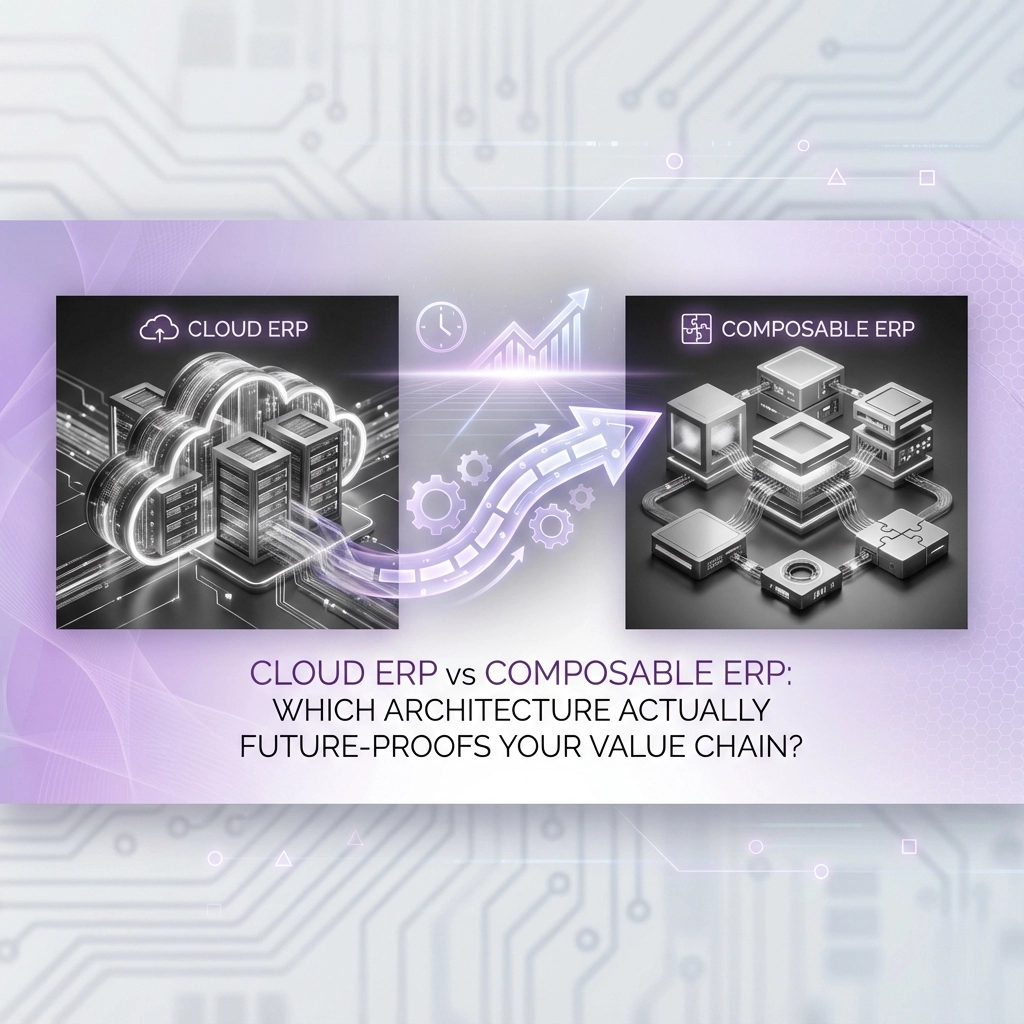
You're sitting in yet another ERP vendor demo, watching the sales team promise seamless integration and future-ready architecture. Sound familiar? If you're like 73% of executives we surveyed last quarter, you're feeling the pressure to modernise your enterprise systems while wrestling with a fundamental question: should you bet on cloud ERP or jump into the composable ERP revolution?
Here's where most business leaders get confused. The industry talks about these approaches as if they're mutually exclusive, but they're actually addressing different aspects of your technology stack. Cloud ERP focuses on deployment and delivery models, while composable ERP tackles architectural design and system integration philosophy.
Let's cut through the vendor noise and examine what each approach actually means for your value chain's future.
What Cloud ERP Really Means (Beyond the Marketing Hype)
Cloud ERP isn't just "your old system hosted somewhere else." When vendors talk about cloud ERP, they're typically referring to Software-as-a-Service platforms like Workday, NetSuite, or SAP SuccessFactors that deliver traditional ERP functionality through web browsers.
The appeal is obvious: no infrastructure headaches, automatic updates, and theoretically lower total cost of ownership. You're essentially renting access to a fully-featured ERP system that someone else maintains and upgrades.
But here's where it gets interesting. Most cloud ERP systems still follow monolithic architectural principles. You're getting a comprehensive suite of interconnected modules: finance, HR, supply chain, manufacturing: all designed to work together within a single vendor's ecosystem.

The promise sounds compelling: unified data, seamless workflows, and consistent user experiences across all business functions. The reality? You're trading architectural flexibility for operational simplicity.
The Composable ERP Alternative: Building Your Value Chain Like Lego Blocks
Composable ERP takes a fundamentally different approach. Instead of buying a monolithic suite, you're assembling best-of-breed applications through API-first integration platforms.
Think of it this way: rather than buying a complete dining room set from one manufacturer, you're selecting the best table from Company A, chairs from Company B, and lighting from Company C: then creating a cohesive experience through thoughtful integration.
In practical terms, this means your HR team might use Workday, your finance team leverages NetSuite, your supply chain runs on SAP, and your customer service operates through Salesforce. The magic happens in the integration layer that connects these systems and maintains data consistency across your value chain.
The composable approach emerged from a simple observation: no single vendor excels at everything. Why force your procurement team to use a mediocre module just because it comes bundled with excellent financial reporting?
The Future-Proofing Face-Off: Where Each Approach Wins and Loses
Flexibility and Vendor Lock-In
Composable ERP wins decisively here. When your business model evolves: and it will: you can swap individual components without rebuilding your entire technology foundation. Acquired a company using different systems? Integrate their best applications into your composable stack. New regulatory requirements demanding specialised compliance tools? Add them without disrupting existing workflows.
Cloud ERP systems, despite their modern delivery model, often recreate vendor lock-in digitally. You're still dependent on a single provider's roadmap, upgrade schedule, and strategic priorities. When they sunset features or pivot their platform focus, you're along for the ride whether you like it or not.
Implementation Speed and Complexity
Here's where cloud ERP typically has the advantage. Deploying a unified suite from a single vendor: especially one with pre-configured industry templates: can get you operational faster than assembling and integrating multiple best-of-breed solutions.
Composable implementations require more upfront architectural planning. You're essentially becoming a systems integrator, which demands internal capabilities that many organisations lack. The good news? The initial complexity often pays dividends in long-term flexibility.

Total Cost of Ownership
This comparison gets murky quickly because it depends heavily on your specific requirements and scale. Cloud ERP proponents point to predictable subscription costs and eliminated infrastructure expenses. Composable advocates highlight the efficiency gains from using purpose-built solutions for each function.
The reality? Cloud ERP often starts cheaper but can become expensive as you add users and modules. Composable approaches typically require higher upfront investment but can deliver better long-term economics if you choose your components wisely.
Data Integration and Consistency
Cloud ERP systems excel at maintaining data consistency because everything lives within the same database architecture. Your sales data automatically flows to financial reporting, inventory levels update in real-time across modules, and you get a genuinely unified view of business operations.
Composable architectures require more sophisticated data governance. You're managing multiple data sources, ensuring synchronisation across systems, and maintaining data quality across various platforms. Modern integration platforms have made this dramatically easier, but it still requires more intentional design and ongoing management.
The Hybrid Reality: Why the Best Answer Might Be "Both"
Here's what most consulting firms won't tell you: successful enterprise architectures increasingly blend both approaches. You might run core financial operations on a cloud ERP platform while using composable principles for customer-facing applications and specialised business functions.
Consider how Amazon approaches this challenge. Their core logistics and inventory management systems follow composable principles: best-of-breed solutions integrated through APIs. But their financial operations leverage more traditional ERP principles for consistency and compliance.
The key is understanding which parts of your value chain benefit most from tight integration versus which need maximum flexibility.
Making the Decision: A Framework for Your Specific Context
Choose Cloud ERP When:
Your business operates in a relatively stable industry with well-established processes. You need faster implementation with lower internal technical requirements. Your competitive advantage comes from execution excellence rather than technological differentiation. You're a smaller organisation without dedicated integration capabilities.
Choose Composable ERP When:
Your industry is experiencing rapid technological disruption. You operate in multiple markets with different regulatory requirements. Your competitive advantage depends on technological innovation. You have or can develop strong internal integration capabilities. You need to accommodate frequent acquisitions or business model changes.

The Practical Assessment Questions
Ask yourself: How often do your business requirements change? What's your tolerance for implementation complexity? Do you have internal technical capabilities to manage system integration? How important is vendor independence to your strategic flexibility?
Your answers should guide the decision more than vendor presentations or industry trends.
The Implementation Reality Check
Regardless of which approach you choose, success depends more on execution than architecture. We've seen brilliant composable implementations fail due to poor change management, and traditional cloud ERP deployments succeed through excellent project governance.
The critical success factors remain consistent: clear business requirements, executive sponsorship, adequate training, and realistic timelines. Don't let architectural debates distract you from these fundamentals.
Your Next Steps Forward
The future-proofing question isn't really about cloud versus composable: it's about choosing an approach that aligns with your business strategy and organisational capabilities.
Start by auditing your current system pain points. Are you struggling with inflexibility, integration challenges, or operational inefficiencies? Map these problems to the architectural solutions that best address them.
Consider engaging with specialists who understand both approaches rather than vendors pushing single solutions. Value Chain Management has guided organisations through both cloud ERP implementations and composable architecture designs, helping them choose the right approach for their specific context.
The technology landscape will continue evolving, but organisations that thoughtfully align their architecture choices with business strategy will thrive regardless of which specific approach they choose. Make the decision based on your unique requirements, not industry hype.
Your value chain's future depends on making this choice deliberately, not defaulting to whatever the loudest vendor is selling this quarter.