

VCM thought leadership
The Hidden ROI Gap: Why Gen Z Talent Will Make or Break Your Data Transformation Success
Here's a question that keeps business leaders awake at night: Why are we spending millions on AI and data transformation initiatives, yet seeing modest returns that barely justify the investment?
The answer isn't in your technology stack. It's sitting in your open-plan office, probably wearing AirPods and wondering why their entry-level role feels increasingly automated away.
We're talking about Gen Z: the generation that's either going to unlock the true potential of your data transformation or become the reason it fails spectacularly. And right now, most companies are accidentally choosing the latter.
The ROI Gap That Nobody Talks About
Walk into any boardroom where data transformation is being discussed, and you'll hear the same metrics: productivity gains, cost savings, process efficiency. What you won't hear is the metric that actually determines success: workforce engagement and the human capacity to orchestrate these new systems effectively.
This is the hidden ROI gap. Companies measure everything except the thing that matters most: whether their people can actually make the technology work.

Consider this reality check: while organizations justify AI investments based on productivity metrics, they rarely evaluate outcomes based on workforce satisfaction. Yet happy, engaged workers are 13% more productive. When you're talking about multi-million pound transformation initiatives, that 13% isn't a nice-to-have: it's the difference between success and expensive failure.
Here's where it gets interesting. Gen Z workers, when properly equipped and engaged, don't just bridge this gap: they obliterate it. Their digital fluency, combined with their hunger for meaningful work, creates a multiplier effect that traditional ROI calculations completely miss.
The Gen Z Paradox: Digital Natives in a Disrupted Job Market
Gen Z enters the workforce at a fascinating inflection point. They're the first generation to grow up with smartphones, social media, and cloud computing as standard. They instinctively understand technology in ways that would take older workers months of training to achieve.
But here's the cruel irony: AI is systematically eliminating the entry-level roles where this generation typically starts their careers. At the beginning of 2024, about 10% of jobs required AI skills. By mid-year, that number jumped to 36%. The demand isn't for basic digital literacy: it's for orchestration skills, the ability to blend business knowledge with practical AI application.
This creates a structural problem. Traditional career progression pathways have been disrupted before Gen Z workers even get their first opportunity. The entry-level positions that should be teaching them business fundamentals are disappearing, while mid-level roles requiring sophisticated AI skills multiply.
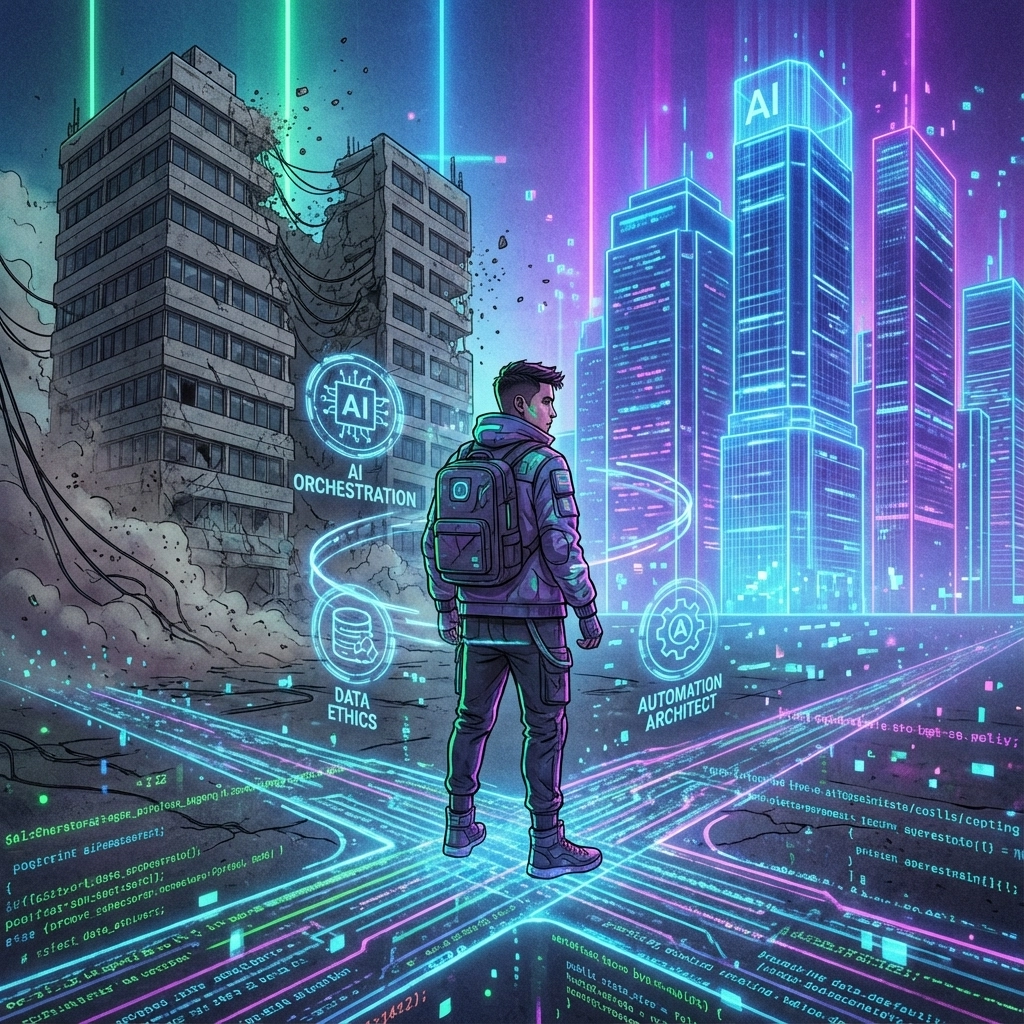
But smart business leaders are recognizing this disruption as an opportunity, not a threat. Gen Z workers who develop AI orchestration skills don't just fill roles: they transform them. They bring innovative problem-solving approaches, think outside conventional frameworks, and experiment with ideas that seasoned workers might dismiss. When you pair that creativity with AI's analytical capabilities, you get something powerful: genuine innovation that drives measurable returns.
Why Most Companies Are Getting This Wrong
The mistake most organizations make is treating data transformation like a technology project instead of a workforce evolution project. They buy the software, implement the systems, then wonder why adoption is slow and returns are disappointing.
We've seen this pattern repeatedly in our work with clients. Companies invest heavily in AI tools but neglect the human infrastructure needed to maximize their potential. They focus on automating tasks without considering whether their teams can effectively manage and optimize these automated processes.
The result? Expensive technology that delivers modest improvements because the workforce lacks the skills and engagement needed to unleash its full potential.
This is where Gen Z becomes either your secret weapon or your biggest missed opportunity. Their digital fluency means they can learn AI tools quickly. Their adaptability means they can evolve with changing technology. Their understanding of digital communication enables them to create hyper-personalized customer interactions when given access to AI-analyzed customer data.
But only if you invest in developing these capabilities systematically.
The Real ROI Multipliers Nobody Measures
Here's what the spreadsheets miss: Gen Z workers with proper AI training don't just perform better: they stay longer, engage more deeply, and drive innovation that creates competitive advantages.
Consider the retention impact alone. Talent leaders who maintain regular communication with employees build trust and boost loyalty to 82%. When Gen Z workers see their organization investing in their AI skills development, they don't just become more productive: they become advocates for your transformation initiative.
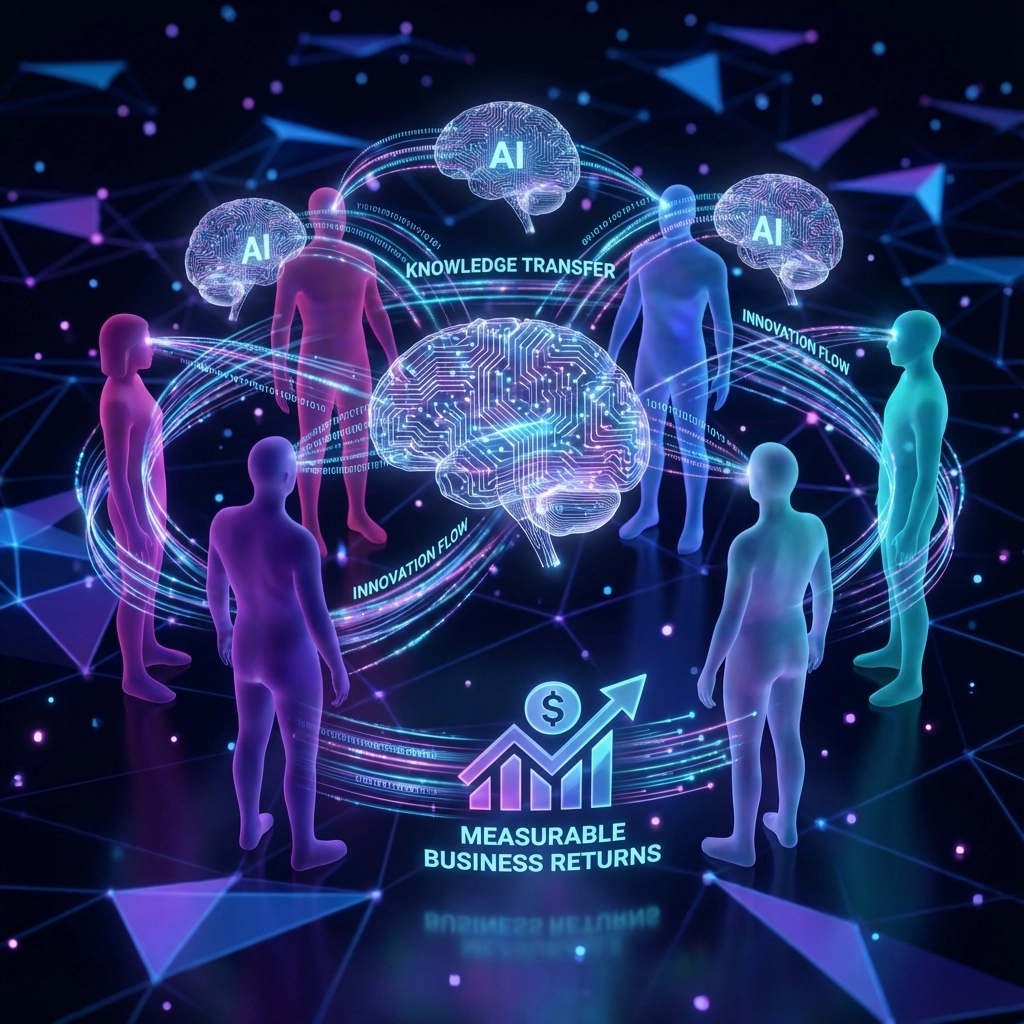
Then there's the innovation multiplier. Gen Z brings fresh perspectives to data analysis, customer engagement, and process optimization. They question assumptions that established teams take for granted. When you give them AI tools and the training to use them strategically, they often discover applications and efficiencies that more experienced workers overlook.
We've witnessed this transformation firsthand. Young professionals who understand both traditional business principles and AI capabilities become bridges between older leadership and newer technology. They translate strategic objectives into AI-driven solutions while helping senior team members understand the practical implications of digital transformation.
Practical Actions That Actually Move the Needle
So how do you turn Gen Z talent into a competitive advantage instead of a challenge? The answer lies in treating workforce development as a core component of transformation ROI, not an afterthought.
First, redesign your training approach. Don't just teach AI tools: teach orchestration. Help Gen Z workers understand how to blend their business knowledge with AI capabilities. Create hands-on workshops where they can experiment with real scenarios and develop practical skills that directly impact your bottom line.
Second, create career progression pathways that account for disrupted entry points. Design apprenticeships or development programs that take early-career talent from foundational skills to advanced orchestration competencies. This transforms the skills gap from a liability into a pipeline of specialized talent.
Third, measure engagement alongside productivity. Track not just how much work gets done, but how satisfied your Gen Z workers are with their roles and growth opportunities. When they see AI as empowering rather than threatening, their engagement: and productivity: skyrockets.

Fourth, leverage their collaborative strengths. Gen Z excels at cross-functional collaboration and knowledge sharing. Use these strengths to create AI adoption champions who can help older workers adapt to new systems while learning business wisdom from more experienced colleagues.
The key insight? Gen Z workers with AI skills don't just fill positions: they create value in ways that traditional job descriptions can't capture. They spot optimization opportunities, suggest process improvements, and bridge communication gaps between technical capabilities and business objectives.
The Competitive Advantage Hidden in Plain Sight
Here's what forward-thinking leaders understand: the organizations that successfully integrate Gen Z talent into their data transformation initiatives won't just see better ROI: they'll create sustainable competitive advantages that compound over time.
When you have a workforce that naturally understands technology, is trained in business orchestration, and is engaged in meaningful work, you get something remarkable. You get teams that can rapidly adapt to new AI developments, identify emerging opportunities, and implement solutions faster than competitors still struggling with basic adoption.
This isn't about replacing experienced workers with younger ones. It's about creating synergistic teams where Gen Z's digital fluency combines with institutional knowledge to maximize the potential of your transformation investments.
The hidden ROI gap exists because most organizations measure the wrong things. They track automation metrics while ignoring engagement. They count cost savings while overlooking retention improvements. They implement technology while neglecting the human systems required for adoption success.
Gen Z talent, properly developed and empowered, represents the key to closing this gap. Their success in your data transformation initiatives isn't incidental to ROI: it's foundational to it.

The question isn't whether AI and data transformation will reshape your industry: it's whether you'll have the workforce capable of maximizing these changes when they arrive. And that workforce is already here, probably wondering whether you'll invest in their potential or automate around their absence.
The choice, and the competitive advantage, is yours.
Ready to transform your approach to data transformation and Gen Z talent development? Discover how Value Chain Management helps organizations bridge the ROI gap through strategic workforce and technology alignment.