
VCM thought leadership
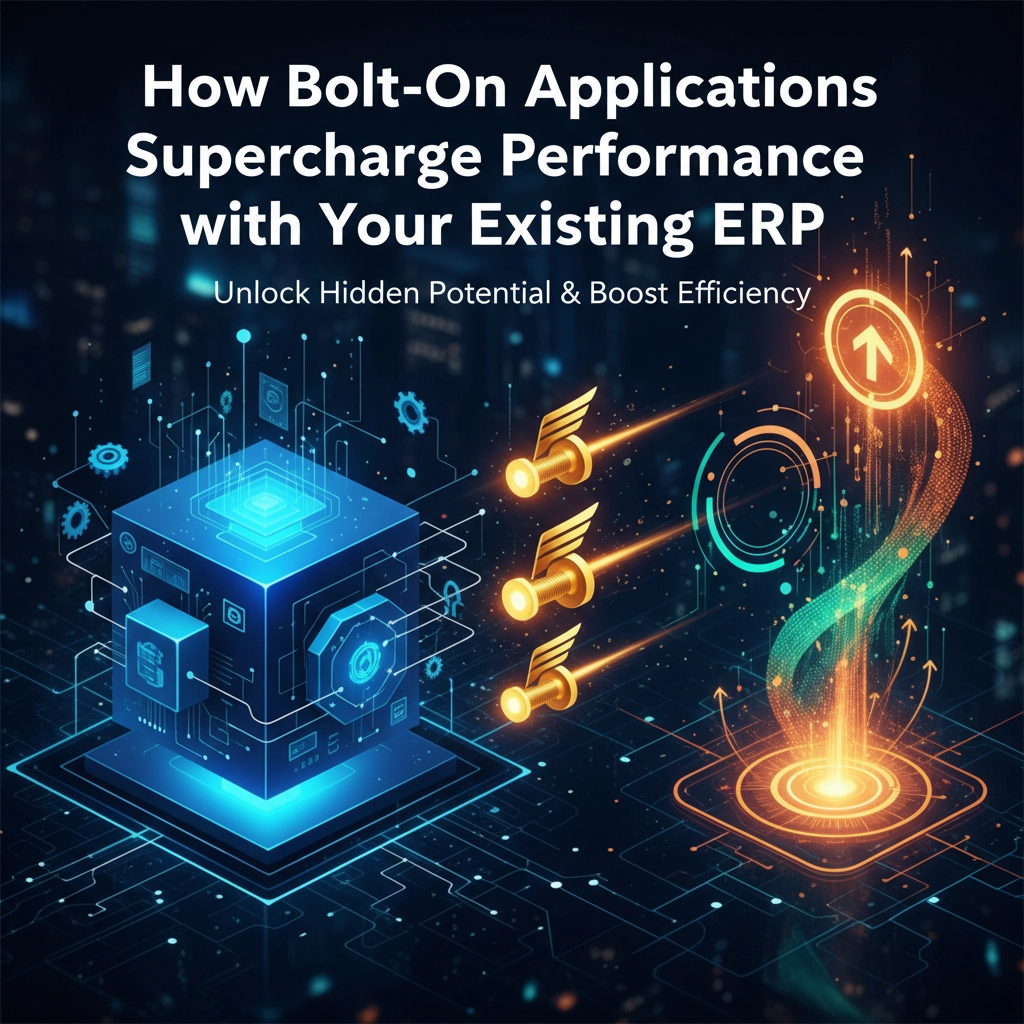
How Bolt-On Applications Supercharge Performance with Your Existing ERP
You've invested heavily in your ERP system, but let's be honest: it's not doing everything you hoped it would. Maybe your reporting is still clunky, your customer data feels scattered, or you're spending way too much time on manual processes that should be automated. Sound familiar?
Here's the thing: you're not alone, and you don't need to rip out your entire ERP system to fix these problems. Bolt-on applications are changing the game for businesses just like yours, turning existing ERP investments into powerhouses of efficiency and insight.
What Are Bolt-On Applications Really?
Think of bolt-on applications as smart additions to your existing ERP: specialized tools that plug directly into your current system without requiring a complete overhaul. Instead of replacing what you have, these applications extend your ERP's capabilities in specific areas where you need the most help.
Whether it's advanced analytics, customer relationship management, supply chain optimization, or automated accounts receivable, bolt-ons give you targeted functionality without the massive disruption and cost of a full system replacement. We're talking about strategic enhancements that work with your current infrastructure, not against it.

The Real Performance Game-Changers
Automation That Actually Works
Let's start with the obvious win: automation. But we're not talking about basic workflow automation here. Modern bolt-on applications bring intelligent automation that handles complex, labor-intensive processes your standard ERP struggles with.
Take accounts receivable, for example. A specialized AR bolt-on can automate cash application, monitor credit risks in real-time, handle collection processes, and reconcile accounts: all without human intervention. This isn't just about saving time; it's about eliminating the errors that come with manual data entry and freeing your team to focus on strategic work that actually grows your business.
The same principle applies to supply chain management. A procurement bolt-on can automatically generate purchase orders based on inventory levels, integrate directly with supplier systems for real-time tracking, and flag potential disruptions before they become costly problems.
Real-Time Visibility Into What Actually Matters
Standard ERP systems often leave you working with yesterday's data to make today's decisions. That's a problem when markets move fast and customer expectations are higher than ever.
Bolt-on applications change this dynamic completely. A business intelligence bolt-on gives you real-time dashboards that track the metrics that actually drive your business: not just generic reports that look impressive but don't inform action. Sales teams can see live pipeline data, operations managers can monitor inventory levels in real-time, and executives can track performance against strategic goals without waiting for month-end reports.
This real-time visibility creates something even more valuable: the ability to be proactive instead of reactive. When you can see problems developing before they become crises, you can address them while solutions are still simple and cost-effective.

Integration That Actually Makes Sense
Now, here's where many businesses worry about bolt-on applications: "Won't this create more complexity?" The answer depends entirely on how the integration is handled: and modern bolt-ons are designed with simplicity in mind.
API-Based Integration: The Direct Approach
Application Programming Interfaces (APIs) create direct connections between your ERP and bolt-on applications. This means data flows seamlessly between systems in real-time, creating a unified view of your operations without the delays and errors that come with manual data transfers.
When your CRM bolt-on connects directly to your ERP through APIs, your sales team sees the same customer data that your finance team works with: no discrepancies, no delays, no confusion about which numbers are actually correct.
Middleware: The Bridge Builder
For more complex integrations, middleware acts as a translator between different systems. This software layer sits between your ERP and bolt-on applications, automatically handling data mapping and transformations so everything works together smoothly.
The beauty of middleware is that it protects your core ERP system from modifications while enabling sophisticated integrations. Your IT team doesn't need to worry about breaking existing functionality when adding new capabilities.

Where Bolt-Ons Deliver Immediate Value
Customer Experience Revolution
Customer expectations have changed dramatically in recent years. They expect personalized service, quick responses, and seamless experiences across all touchpoints. Your ERP probably wasn't designed with these expectations in mind.
A CRM bolt-on changes this equation completely. By integrating customer interaction data with your ERP's financial and operational information, your team gets a 360-degree view of every customer relationship. Support calls become opportunities to strengthen relationships rather than just solve problems. Sales conversations become consultative rather than transactional.
Financial Process Transformation
Financial processes are often where ERP limitations become most apparent. Standard systems handle basic accounting well enough, but they struggle with sophisticated financial analysis, cash flow optimization, and risk management.
Financial bolt-ons bring advanced capabilities like automated invoice matching, dynamic cash flow forecasting, and real-time financial reporting that actually helps with decision-making. These aren't nice-to-have features: they're competitive advantages that can significantly impact your bottom line.
Supply Chain Optimization
Global supply chains are more complex than ever, and your ERP system probably can't keep up with the nuances of modern procurement and logistics. Supply chain bolt-ons provide the specialized functionality needed to optimize these critical processes.
From automated vendor management to predictive analytics that anticipate supply disruptions, these applications turn your supply chain from a cost center into a competitive advantage.

The Strategic Value Chain Perspective
At Value Chain Management, we see bolt-on applications as part of a broader approach to operational efficiency consulting. The goal isn't just to add functionality: it's to create integrated systems that optimize your entire value chain.
This means looking at how different bolt-on applications work together, not just individually. A CRM bolt-on that integrates with a business intelligence application and an automated accounts receivable system creates synergies that multiply the value of each individual component.
Data transformation consulting becomes crucial here. The real power of bolt-on applications isn't in the applications themselves: it's in how they enable better use of your data across your entire organization. When customer data flows seamlessly from marketing through sales to finance and operations, you can optimize the entire customer lifecycle rather than just individual touchpoints.
Cost-Effectiveness That Makes Sense
Let's talk about the financial reality: complete ERP replacements are expensive, disruptive, and risky. Bolt-on applications offer a different path: one that delivers significant capabilities without the massive investment and operational disruption.
Most bolt-on applications use subscription licensing models that scale with your business. You pay for what you use, when you use it, rather than making large upfront investments in capabilities you may not need immediately. This approach makes advanced functionality accessible to businesses that couldn't justify the cost of custom development or premium ERP modules.
The return on investment timeline is typically much shorter with bolt-ons. Instead of waiting months or years to see benefits from a major system implementation, most businesses see measurable improvements within weeks of deploying targeted bolt-on applications.

Looking Forward: AI and Value Chain Optimization
The future of bolt-on applications is increasingly intelligent. AI in value chain optimization isn't just about automation: it's about creating systems that learn and improve continuously. Modern bolt-ons incorporate machine learning capabilities that adapt to your specific business patterns and optimize processes automatically.
This means your accounts receivable system gets better at predicting which customers might have payment issues. Your supply chain management tools become more accurate at forecasting demand. Your CRM applications develop better insights into customer preferences and behaviors.
Making It Work for Your Business
The key to success with bolt-on applications isn't just selecting the right tools: it's implementing them as part of a coherent business consulting strategy that aligns with your broader operational goals.
This requires understanding your current value chain, identifying the specific constraints that limit performance, and selecting bolt-on applications that address those constraints while creating synergies with your existing systems.
We're not magicians: we can't transform a fundamentally flawed business model with technology alone. But when bolt-on applications are implemented thoughtfully as part of a comprehensive approach to value chain management, they can deliver transformational improvements in efficiency, customer satisfaction, and profitability.
The question isn't whether bolt-on applications can supercharge your ERP performance: it's whether you're ready to take advantage of what they offer. In today's competitive environment, businesses that leverage these tools effectively gain significant advantages over those that stick with basic ERP functionality alone.
Your existing ERP investment doesn't have to be a limitation. With the right bolt-on applications and strategic implementation, it can become the foundation for the efficient, responsive, data-driven operation your business needs to thrive.