

VCM thought leadership
Customer Engagement Secrets Revealed: What AI Transformation Experts Don't Want You to Know
Let's be honest: you've probably been to enough webinars where AI experts paint a picture of customer engagement nirvana. Push a button, and suddenly your customers are perfectly engaged, your conversion rates skyrocket, and your team has time for long lunches. Sounds great, right?
Here's what they're not telling you: most AI customer engagement initiatives fail spectacularly, and it's not because the technology doesn't work. It's because business leaders are getting sold a dream instead of a roadmap.
After working with countless businesses on business transformation services and AI in value chain optimization, we've seen the gap between vendor promises and real-world results. Today, we're pulling back the curtain on what actually happens when you try to integrate AI into your customer engagement: and more importantly, how to do it without burning through your budget.
The Reality Check No One's Having
The stats sound incredible: AI is projected to handle 95% of customer interactions by 2025, with businesses seeing 155% increases in AI-powered sales engagement. Marketing teams report 40% productivity boosts.
But here's the uncomfortable truth we see in our business consulting work: these numbers represent the successful implementations. For every success story, there are three companies stuck in pilot program purgatory, wondering why their AI chatbot sounds like a robot and their "personalized" emails feel generic.

The real challenge isn't technical: it's strategic. Most businesses are automating surface-level tasks instead of solving meaningful customer problems. They're putting AI band-aids on broken customer engagement strategies rather than fixing the underlying issues.
The Three Fatal Mistakes (That Vendors Won't Mention)
Mistake #1: Strategy Gets Sacrificed for Speed
We get it. Your competitor just launched an AI chatbot, and your boss wants to know why you're behind. So you rush to implement something: anything: to show progress.
This is where operational efficiency consulting becomes crucial. The biggest killer of AI value isn't bad technology; it's rushed implementation without proper groundwork. Teams skip journey mapping, segment clarity, and signal selection, then wonder why their AI underperforms.
What to do instead: Slow down and map your customer journey first. Identify where AI can actually add value, not just where it looks impressive. We've helped businesses save months of wasted effort by getting this foundation right.
Mistake #2: Data Quality Problems Get Amplified
AI doesn't fix bad data: it amplifies it. If your customer data is fragmented, outdated, or inconsistent, AI will just deliver that confusion faster and at scale.
The reality: Most organizations plug AI tools into data ecosystems that were never designed with AI in mind. It's like trying to run a Formula 1 race car on gravel roads.
What actually works: Audit your data quality before investing in advanced AI. Through our data transformation consulting, we help businesses clean up their customer signals, unify records, and establish proper data governance. It's not glamorous, but it's essential.
Mistake #3: Feedback Loops Stay Broken
Here's a secret that AI vendors rarely discuss: their platforms offer robust analytics dashboards, but most teams never close the learning loop. They review performance manually without feeding insights back into the AI to improve targeting and decision-making.
The gap: AI learns best through continuous iteration, but most businesses treat it like a "set it and forget it" solution.

The Personalization Trap Everyone Falls Into
"Hyper-personalization at scale": it's the holy grail vendors sell. But here's what our business resilience consulting has taught us: trying to personalize everything, everywhere, all at once is a recipe for mediocrity.
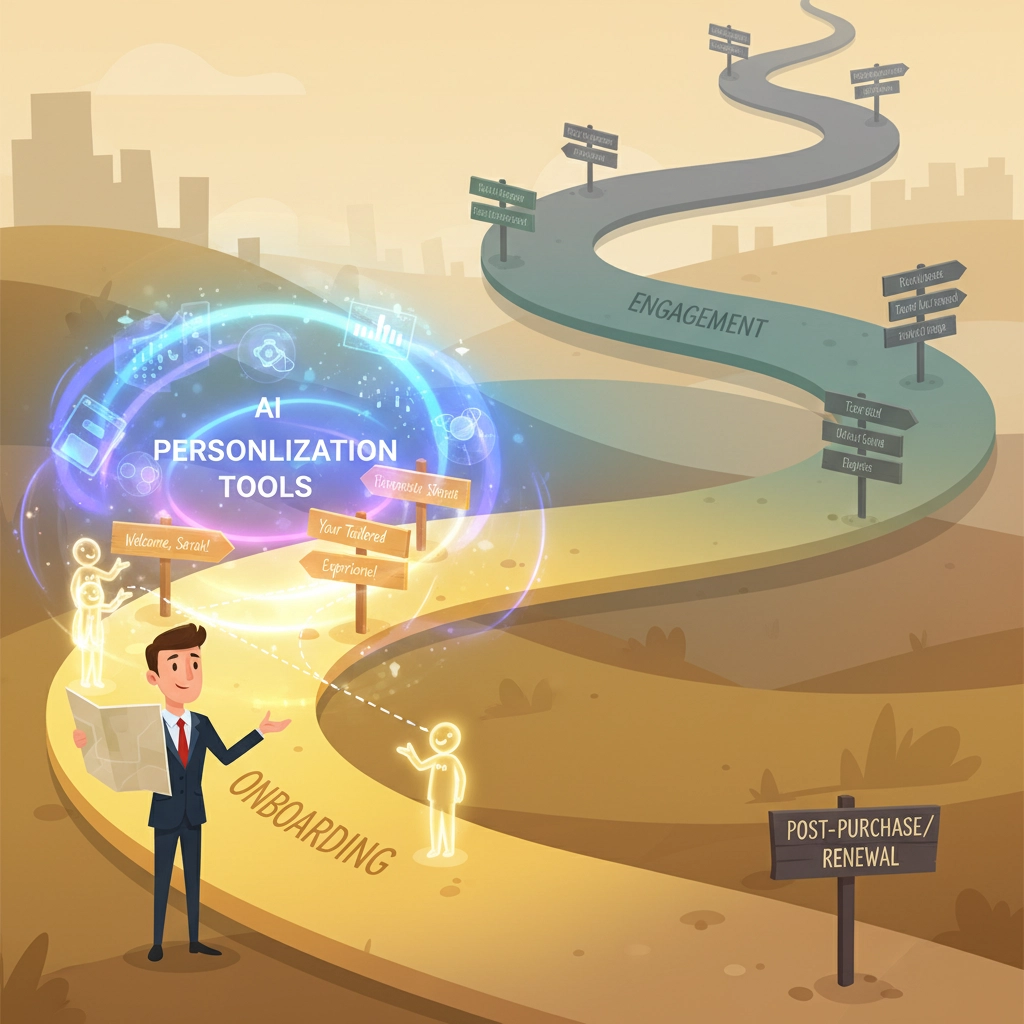
The smarter approach: Focus on personalizing early in the customer journey: during onboarding and initial product interactions. This is where AI can make the biggest impact without overwhelming your resources.
Real example: Instead of personalizing every email in your sequence, use AI to personalize the first touchpoint based on how customers found you. Someone who came from a LinkedIn ad has different needs than someone who found you through a Google search for "value chain optimization."
What Actually Works (The Unglamorous Truth)
After helping dozens of businesses implement AI in value chain management, here's what we've learned separates success from failure:
Start With Routine Tasks, Not Revolutionary Ones
Don't try to revolutionize customer service on day one. Use AI for repetitive, low-stakes tasks first:
Content creation for social media posts
Initial email categorization
Basic FAQ responses
Appointment scheduling
Why this works: Your team learns how AI behaves in a low-risk environment, and you can refine your approach before tackling complex interactions.
Build Learning Loops Into Everything
Connect your campaign results directly to your next round of targeting. When AI identifies a customer segment that converts well, feed that information back immediately to refine future targeting.
Practical tip: Set up weekly reviews where your team examines AI performance and adjusts parameters. This isn't about major overhauls: small, consistent improvements compound quickly.
Let Humans Handle What Humans Do Best
AI excels at pattern recognition and data processing. Humans excel at empathy, complex problem-solving, and relationship building. Don't try to replace one with the other.
The sweet spot: Use AI to surface insights and handle routine interactions, then route complex issues to your team with full context and suggested solutions.
The Budget-Friendly Implementation Path
You don't need a six-figure budget to get started with AI customer engagement. Here's the approach we recommend to our business transformation services clients:
Phase 1: Foundation (Months 1-2)
Audit existing customer data
Map current customer journey touchpoints
Identify 2-3 high-impact, low-risk automation opportunities
Budget: $5,000-15,000
Phase 2: Pilot (Months 3-4)
Implement AI for one specific use case (usually email segmentation or chatbot for basic queries)
Establish measurement and feedback processes
Budget: $10,000-25,000
Phase 3: Scale (Months 5-6)
Expand successful pilots
Add more sophisticated personalization
Integrate with existing systems
Budget: $15,000-40,000
Total investment over 6 months: $30,000-80,000 vs. the $200,000+ many businesses waste on rushed implementations.
The Integration Reality (What No One Talks About)
Most AI vendors show demos where everything works perfectly. In reality, integrating AI with your existing systems is messy, time-consuming, and requires ongoing maintenance.
Common integration challenges:
CRM systems that don't play nice with AI platforms
Customer service tools that require manual data entry
Analytics platforms that don't share data effectively
This is where operational efficiency consulting becomes invaluable. We help businesses navigate these technical challenges without getting stuck in integration hell.

Measuring Success Beyond Vanity Metrics
Vendors love to show off engagement rates and response times. But what actually matters for your business?
Metrics that matter:
Customer lifetime value increases
Support ticket resolution rates
Sales conversion improvements
Team productivity (time saved on routine tasks)
Customer satisfaction scores
Red flag metrics: If your AI vendor only talks about engagement rates or response volumes, dig deeper. High engagement doesn't equal business value.
Getting Started This Week
Ready to explore AI customer engagement without the hype? Here's your practical first step:
Week 1 Action Plan:
Audit one customer touchpoint (email, chat, or phone)
Identify the top 3 repetitive tasks your team handles
Document your current customer data sources
Research AI tools that specifically address those repetitive tasks
Don't: Jump straight into advanced personalization or complex chatbots Do: Start with simple automation that saves time today
The Real Secret? It's Not About the AI
Here's the secret that AI transformation experts really don't want you to know: successful customer engagement isn't about having the fanciest AI. It's about understanding your customers deeply and using technology to serve them better.
The businesses winning with AI in 2025 aren't those with the most sophisticated algorithms. They're the ones that master the fundamentals: clear strategy, clean data, and continuous improvement loops.
At Value Chain Management, we've seen this pattern repeatedly through our business consulting work. The most successful AI implementations happen when businesses focus on solving real customer problems rather than showcasing cool technology.
Ready to explore how AI can actually improve your customer engagement without breaking your budget? Let's start with an honest conversation about where you are today and where you want to be tomorrow. Because the best AI strategy is one that fits your business, not the other way around.
Contact us to discuss your customer engagement challenges and explore practical, budget-conscious AI solutions that actually work.