VCM thought leadership
Custom vs. Standard Business Transformation Solutions: Which Is Better For Your Operational Efficiency?
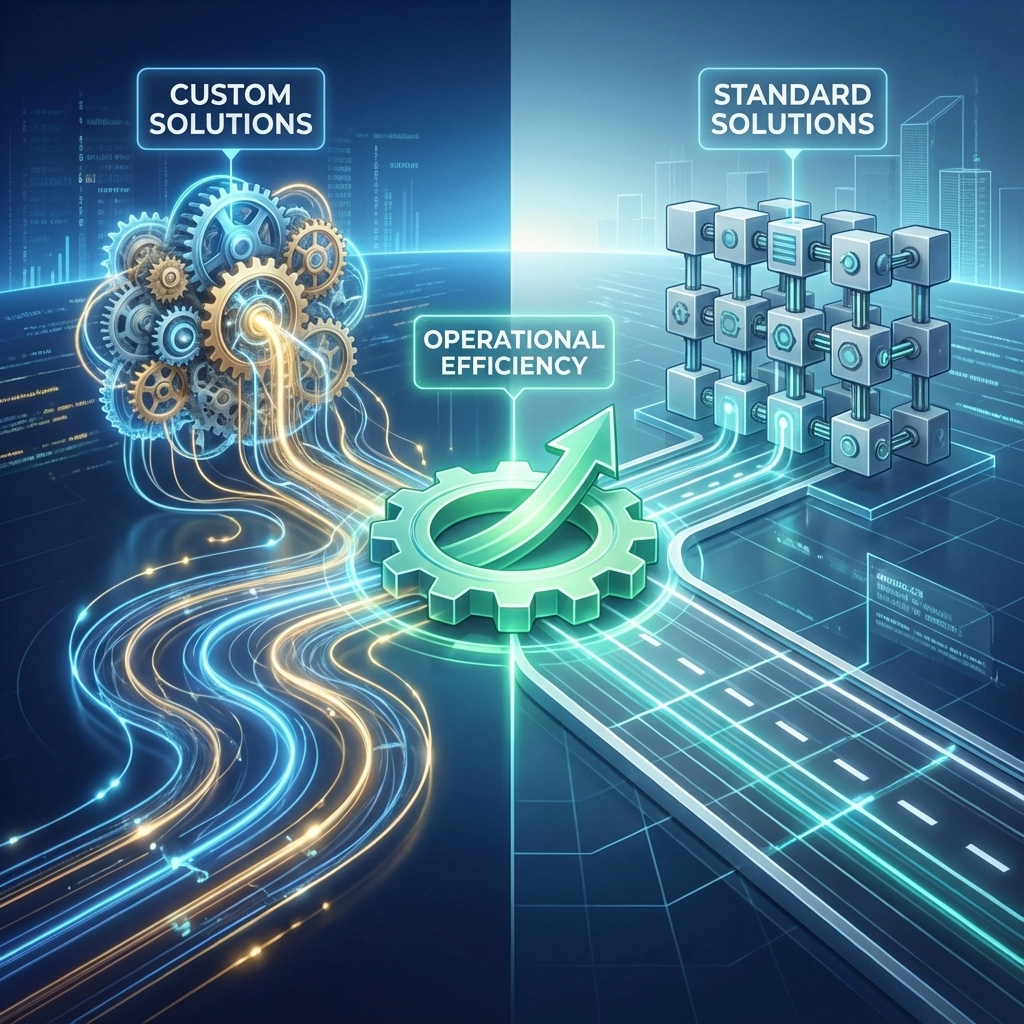
You're staring at two quotes on your desk. One's for a custom business transformation solution that costs three times more but promises to fit like a glove. The other's for a standard package that's cheaper, faster to deploy, but might force you to change how you operate.
Sound familiar?
This decision keeps business leaders awake at night. You need operational efficiency gains, but choosing wrong could set you back months or even years. The pressure to make the right call is real, especially when your board wants results yesterday.
Here's the truth: both approaches can work brilliantly: or fail spectacularly. The difference lies in understanding what your business actually needs versus what sounds good in a presentation.
Custom Solutions: Built for Your Reality
Custom business transformation solutions are like having a suit tailored specifically for you. Every measurement matters, every detail serves a purpose.
When Custom Makes Perfect Sense
Your operations don't fit standard molds. Maybe you're in manufacturing with unique production flows, or you're handling international trade with complex regulatory requirements. Standard software forces you into their boxes, but custom solutions build around your existing reality.
We've seen companies waste months trying to squeeze their processes into off-the-shelf systems, only to realize they've lost the very efficiencies that made them competitive. Custom solutions preserve what works while fixing what doesn't.
The Real Benefits You Get
Strategic alignment isn't just buzzword magic: it's what happens when technology actually serves your business goals. Custom solutions integrate seamlessly with your existing systems, eliminating the data silos and workflow breaks that kill productivity.
You own the solution completely. No vendor lock-in, no surprise licensing increases, no being told that the feature you desperately need "might be available in next year's release." When your business needs evolve, your system evolves with it.
Training becomes simpler because the software works the way your team already thinks. Instead of teaching people new processes, you're giving them better tools for processes they already understand.
The Honest Downsides
Custom costs more upfront. There's no sugar-coating this reality. You're paying for development time, testing, and refinement. Implementation takes longer because you're building something from scratch rather than configuring something pre-built.
You need ongoing maintenance. Unlike standard solutions where the vendor handles updates, you're responsible for keeping your custom system current and secure. This means having technical resources available or maintaining a relationship with your development partner.
Standard Solutions: Fast Track to Functionality
Standard business transformation solutions are the ready-to-wear option. They're designed for common business processes and can get you operational quickly.
Where Standard Solutions Shine
You need results fast. If your current system is completely broken or nonexistent, a standard solution can solve immediate pain points while you plan longer-term improvements. We've helped businesses implement payroll systems, basic ERP functionality, and customer management tools in weeks rather than months.
Your processes align with industry norms. If you're running standard accounting practices, typical inventory management, or conventional customer service workflows, standard solutions can deliver excellent results at lower cost.
Budget constraints are real. Not every business has the resources for custom development, especially when starting digital transformation. Standard solutions let you begin automating and improving operations without massive upfront investment.
The Hidden Costs
Vendor dependency becomes expensive over time. You're locked into their pricing model, their update schedule, their feature roadmap. We've seen clients pay for features they never use while being unable to get the specific functionality they actually need.
Integration challenges multiply. Standard solutions rarely play nicely with your existing systems without expensive middleware or complex workarounds. What seems like a simple implementation becomes a web of integration projects.
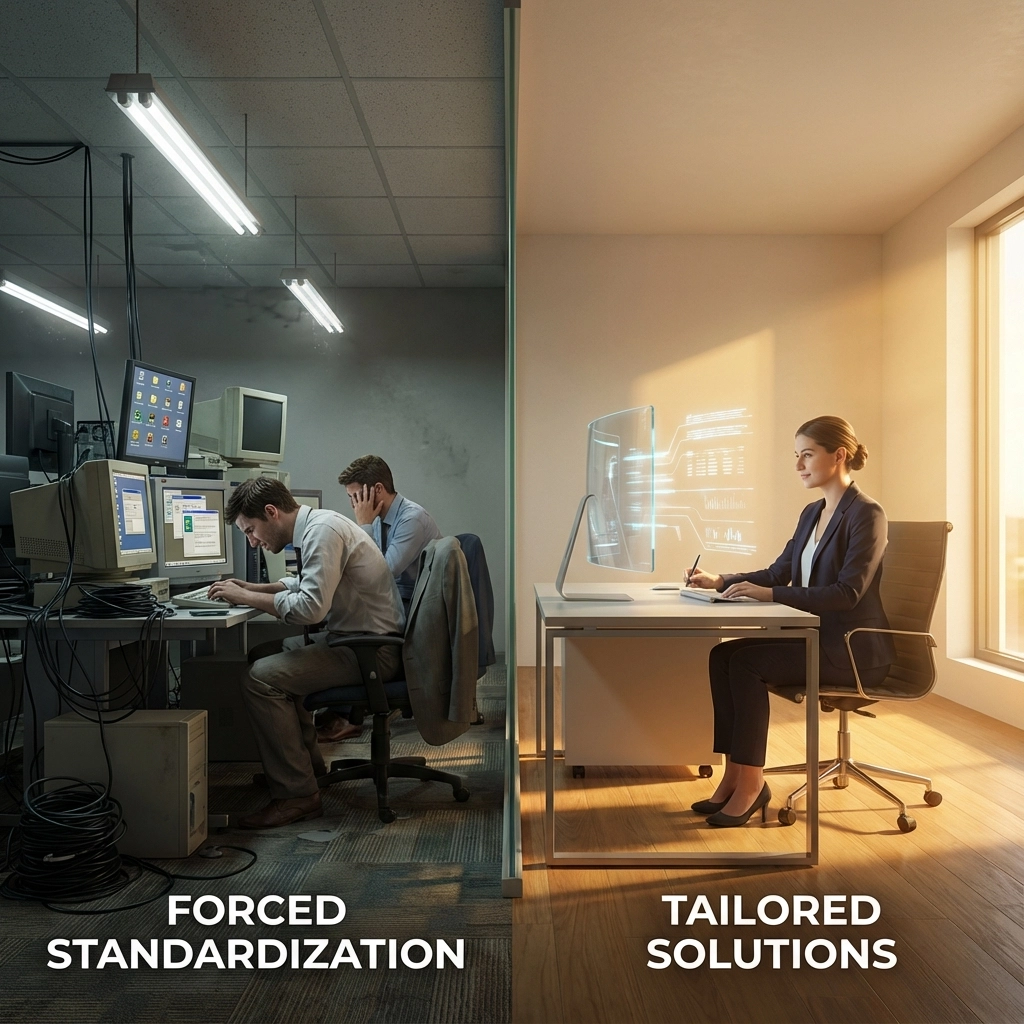
Process changes ripple through your organization. Instead of the software adapting to your workflows, your people must adapt to the software's requirements. This can eliminate efficiencies you didn't even realize you had.
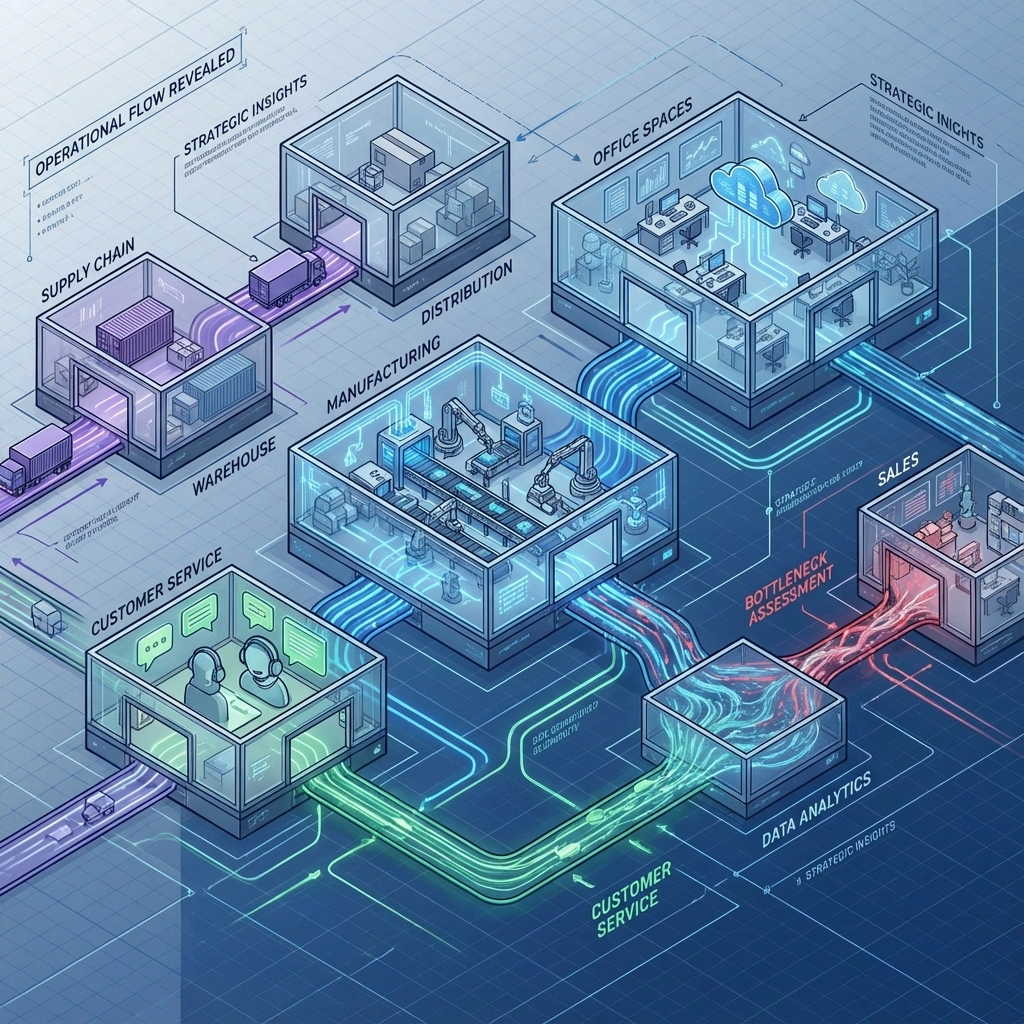
How We Deliver Both: Always Strategically Aligned
At Value Chain Management, we don't push one approach over the other. We start by understanding your actual situation, not your theoretical needs.
Our Strategic Assessment Process
Every engagement begins with listening. What are your current pain points? Where are the bottlenecks killing your efficiency? What regulatory requirements must you meet? How do you actually make money, and what's getting in the way?
We map your value chain completely before recommending any technology. This isn't about finding places to insert software: it's about identifying where the right solution will create genuine operational improvements.
When We Recommend Custom Builds
Your competitive advantage depends on doing things differently. If your unique processes are what make you profitable, standardizing them away would be strategic suicide. We build systems that preserve and enhance your competitive edge.
Integration complexity makes standard solutions more expensive than custom ones. When you need extensive middleware, data transformation layers, and process redesign to make standard software work, custom development often costs less and delivers better results.
Scalability requirements exceed what standard solutions can handle. Growing businesses need systems that grow with them, not platforms that require complete replacement every few years.
When We Recommend Standard Solutions
You need quick wins to build momentum for larger transformation initiatives. Sometimes the best custom solution is one that builds on a foundation of working standard systems.
Your processes genuinely benefit from industry best practices. Standard solutions embody tested approaches that might actually improve your operations, especially in areas outside your core competencies.
Budget timing favors phased implementation. Standard solutions can solve immediate problems while you plan and budget for custom development in critical areas.

The Hybrid Reality
Most successful transformations aren't purely custom or purely standard. They're strategic combinations that optimize for your specific situation.
We often recommend standard solutions for non-differentiating functions: accounting, basic HR management, standard reporting: while building custom solutions for processes that directly impact your competitive position.
This approach lets you move quickly where speed matters while investing development resources where they'll create genuine business value. Your accounting department gets productive immediately, while your unique operational processes get the custom attention they deserve.
Making the Right Choice for Your Business
Choose Custom When:
Your competitive advantage depends on unique operational processes
Integration costs for standard solutions approach custom development costs
You need specific regulatory compliance built into core workflows
Long-term total cost of ownership favors development over licensing
Your growth plans require system flexibility that standard solutions can't provide
Choose Standard When:
You need immediate productivity improvements in non-critical areas
Your processes align well with industry standard practices
Budget constraints require lower upfront investment
Time pressure makes quick deployment essential
You're building foundational capabilities for future custom development
Consider Hybrid When:
Different business functions have different strategic importance
You want to minimize risk while maximizing value
Your transformation needs span both urgent fixes and long-term competitive positioning
You have varying levels of process maturity across your organization
The Strategic Alignment Factor
What matters most isn't whether you choose custom or standard solutions: it's whether your choice aligns with your actual business strategy.
We've seen companies spend massive amounts on custom development for processes that didn't need it, and others cripple their competitive advantage by standardizing critical differentiators. The key is honest assessment of where technology serves your strategic goals versus where it simply automates existing work.
Every recommendation we make connects directly to your business objectives. Will this solution help you serve customers better? Will it reduce costs in ways that matter? Will it position you for the growth you're actually planning?
Your operational efficiency isn't just about having better software: it's about having software that makes your business strategy more effective. Whether that's custom, standard, or hybrid depends entirely on what you're trying to achieve.
The best transformation solutions are the ones that disappear into your operations, making everything work better without making anything work differently than it should. Sometimes that means custom development. Sometimes it means embracing industry standards. Most often, it means thoughtfully combining both approaches in service of your actual goals.