

VCM thought leadership
Business Resilience vs. Business Continuity: Which Strategy Actually Works for Your Value Chain?
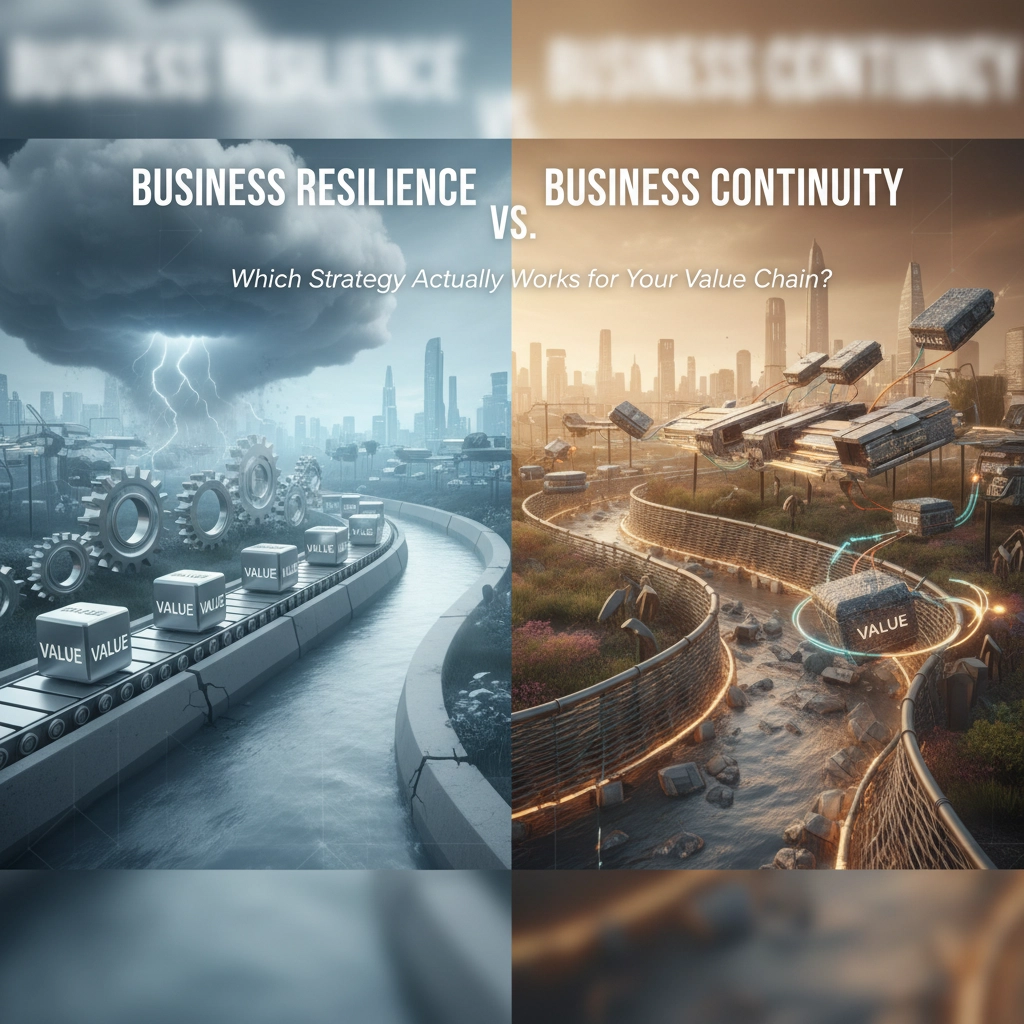
Here's the reality most business leaders face: you're constantly juggling between keeping operations running today while preparing for whatever curveball tomorrow might throw. Whether it's a supplier suddenly going offline, a cyber attack hitting your systems, or supply chain disruptions that seem to pop up weekly: you need a strategy that actually works.
But here's where it gets confusing. Everyone talks about "business continuity" and "business resilience" like they're the same thing. They're not. And choosing the wrong approach for your value chain could mean the difference between thriving through disruption and scrambling to survive it.
So which strategy actually delivers results? Let's break it down in plain terms.
What Business Continuity Really Means for Your Operations
Business continuity is your emergency response plan on steroids. It's reactive, structured, and laser-focused on one goal: keeping critical operations running when things go sideways.
Think of it as your business insurance policy. When a major supplier fails, your production line breaks down, or a natural disaster hits your primary distribution center, business continuity kicks in with pre-planned procedures to minimize downtime and maintain minimum service levels.
Here's what business continuity does well:
Provides immediate crisis response - You've got documented procedures for switching to backup suppliers, alternative production sites, or emergency communication protocols
Reduces financial losses - By minimizing downtime through structured recovery procedures
Ensures regulatory compliance - Many industries require documented continuity plans
Justifies specific investments - You can budget for redundant systems and backup infrastructure based on known risks
Real-world example: A manufacturing company we worked with had their primary European supplier shut down overnight due to regulatory issues. Their business continuity plan immediately activated alternative sourcing from their pre-qualified backup suppliers, maintaining 85% of normal production capacity within 48 hours.

But here's the limitation: Business continuity only works for scenarios you can predict and plan for. It's essentially playing defense: you're trying to get back to where you were before the disruption hit.
Why Business Resilience Goes Further
Business resilience takes a completely different approach. Instead of waiting for problems to happen, it builds adaptive capabilities into your daily operations. It's proactive, strategic, and focused on turning disruptions into competitive advantages.
A resilient value chain doesn't just survive disruption: it evolves through it.
What makes business resilience powerful:
Continuous adaptation - Your systems and processes are constantly improving their ability to handle unexpected challenges
Proactive risk management - You're identifying and addressing vulnerabilities before they become crises
Opportunity recognition - Disruptions become chances to optimize processes and strengthen competitive position
No activation required - Resilient capabilities work 24/7, not just during emergencies
Real-world example: An e-commerce client built resilience by diversifying their fulfillment network, cross-training staff across multiple functions, and implementing AI-driven demand forecasting. When COVID-19 hit, they didn't just maintain operations: they grew market share by 34% while competitors struggled with supply chain disruptions.
The key difference? They weren't just prepared for specific scenarios. They'd built the capability to adapt to whatever came their way.
The Head-to-Head Comparison
Factor | Business Continuity | Business Resilience |
Approach | Reactive - activates during crises | Proactive - integrated into daily operations |
Focus | Maintaining minimum service levels | Adapting and optimizing through disruption |
Planning | Event-specific scenarios | Holistic organizational capability |
Investment | Cost-justified by specific risk probability | Assumes disruptions will occur regularly |
Time Horizon | Short-term recovery | Long-term transformation |
Success Metric | How quickly you get back to normal | How much you improve through challenges |

Which Strategy Actually Works for Your Value Chain?
Here's the thing: asking "which one works" is the wrong question. The right question is: "How do I use both strategically?"
You need business continuity when:
Critical operations must maintain specific minimum levels (think hospitals, financial services, utilities)
Regulatory requirements mandate documented recovery procedures
You're dealing with predictable, high-impact scenarios (natural disasters, major supplier failures)
Downtime costs are measured in thousands per minute
You need business resilience when:
Your industry faces constant, unpredictable changes
Competitive advantage comes from adapting faster than rivals
You want to reduce the frequency of full-scale crises
Long-term growth matters more than short-term stability
The Value Chain Management Approach
At VCM, we don't make you choose between continuity and resilience: we help you build both strategically. Here's how we approach it:
Layer 1: Build Resilient Foundations We start by embedding adaptive capabilities into your core value chain operations. This includes diversified supplier networks, flexible technology platforms, cross-trained teams, and continuous monitoring systems that catch problems before they escalate.
Layer 2: Strategic Continuity Planning For scenarios that resilience can't prevent: major system failures, natural disasters, significant supplier bankruptcies: we develop targeted continuity plans with clear activation triggers and measurable recovery objectives.
Layer 3: Continuous Improvement Loop Every disruption, whether managed through resilience or continuity responses, becomes data for strengthening both capabilities.
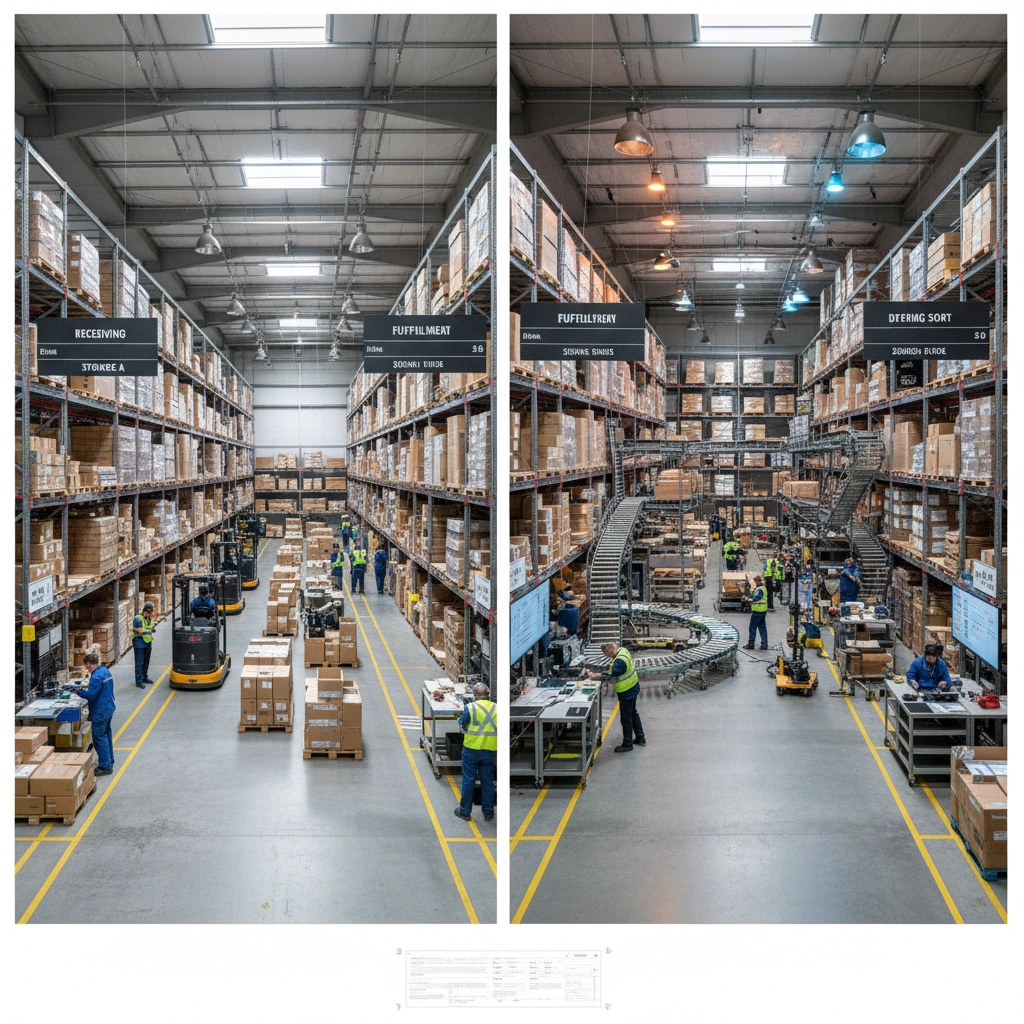
One of our clients, a mid-sized logistics company, saw remarkable results from this integrated approach. Over 18 months, they reduced crisis escalations by 67% through improved resilience capabilities, while their continuity plans handled the remaining disruptions with 40% faster recovery times.
Making It Work: Practical Next Steps
Ready to strengthen your value chain's ability to handle whatever comes next? Here's how to start:
Week 1-2: Assessment
Map your current value chain vulnerabilities
Identify which disruptions could be prevented vs. those requiring response plans
Assess your team's current adaptive capabilities
Month 1-2: Build Resilience Foundations
Diversify critical supplier relationships
Cross-train key personnel across functions
Implement monitoring systems for early risk detection
Develop flexible operational procedures
Month 3-4: Strategic Continuity Planning
Create targeted response plans for high-impact, low-probability events
Establish clear activation triggers and escalation procedures
Test recovery capabilities with realistic scenarios
Ongoing: Continuous Evolution
Treat every operational challenge as learning data
Regularly update both resilience capabilities and continuity plans
Measure improvement in adaptation speed and recovery efficiency
The Bottom Line
Business continuity keeps you alive during crises. Business resilience helps you thrive through constant change. Your value chain needs both: but built strategically, not as competing priorities.
The companies that will dominate the next decade aren't just prepared for disruption. They're built to evolve through it. That's the difference between surviving and winning.
Want to see how this integrated approach could strengthen your specific value chain? We're not magicians, but we do help businesses build the adaptive capabilities that turn disruptions into competitive advantages. Let's talk about your specific challenges and design an approach that works for your reality.
Because at the end of the day, your value chain should be your competitive advantage( not your vulnerability.)