
The Great Kuwaiti Comeback: Latent Potential Waiting for a Spark
- VCM Management
- Feb 13
- 9 min read

If you've recently landed at Kuwait International Airport, navigating its patchwork of expansions and temporary fixes, you might have felt that familiar dissonance. The wealth is visible. The ambition is declared. And the potential is still there: waiting for a spark.
I've just returned from Kuwait, and I'm going to be honest with you: this isn't the country I remember from Gulf business circles two decades ago. And I’m not saying that as a detached observer. I’m actually from Kuwait, and it genuinely depresses me to see the trajectory we’re on: so much potential, so much talk, and yet so little real movement. But here’s the more important point: this is exactly why a comeback is possible. Kuwait already has what most countries don’t: resources, stability, and a history of being first.
This isn't about being unkind. It's about being useful. Because if you want Kuwait to be a regional leader again: in AI, digital transformation, and Vision 2035: you first need an honest picture of what’s happening on the ground, so you can turn the biggest gaps into the biggest opportunities.
From Pioneer to Pause: What Happened to Kuwait's Lead?
Here's where it gets uncomfortable.
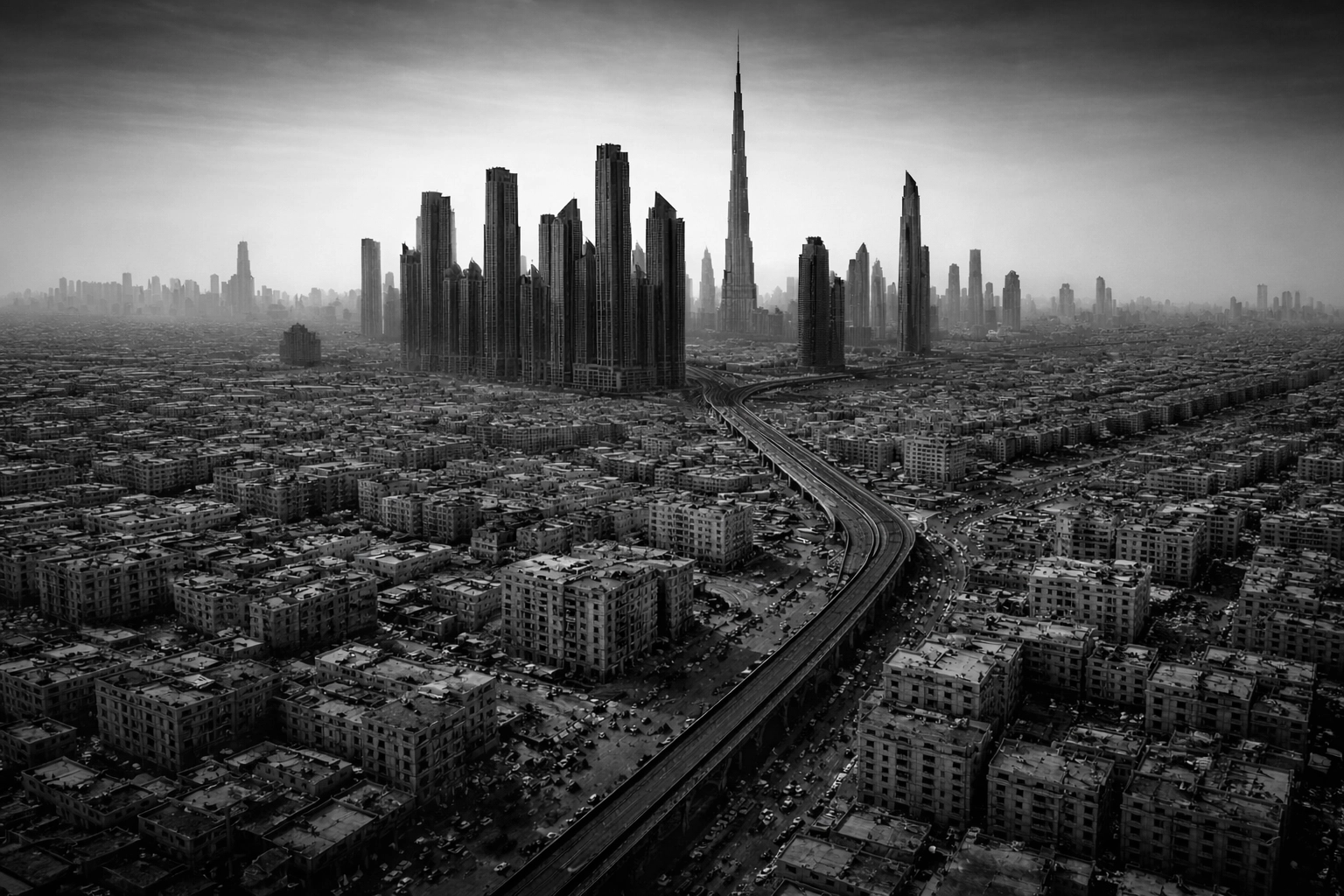
Kuwait was the Gulf's golden child. In the 80s and 90s, it was the benchmark, sophisticated, connected, and commercially advanced. Today, drive from Dubai to Kuwait, and the contrast is jarring. While the UAE, Qatar, and Saudi Arabia have reinvented themselves, Kuwait appears frozen in a loop of incremental tweaks rather than genuine transformation.
The airport? A series of extensions bolted onto an aging frame. The roads? Patched, not redesigned. The business systems? Clunky workarounds layered on top of outdated processes. Everything feels like a tweak to something that needed replacing years ago.
Official data shows capital spending on development projects tripled in early 2025, and there's talk of updating 250 laws by December 2026. On paper, momentum exists. But walking through Kuwait City, you don't feel transformation, you feel maintenance mode stretched beyond its limits.
The "Tweak Culture" That's Holding Everything Back
Let's talk about what's really driving this stagnation.
There's a pattern I've observed across Kuwaiti businesses and institutions: the belief that surface-level adjustments constitute transformation. New paint on old walls. Updated logos on unchanged processes. Digital portals that simply digitise broken workflows rather than reimagine them.
This isn't transformation. It's decoration.
Real transformation requires dismantling what doesn't work and rebuilding with intention. It demands asking hard questions: Why does this process exist? Who does it serve? What would we build if we started from scratch?
Instead, Kuwait has developed a culture of preservation dressed as progress. And nowhere is this more visible than in its built environment, endless malls with identical shops, towering buildings without intellectual tenants, infrastructure projects that prioritise appearance over function.
Sound familiar? It's the "Camel to Cadillac" trap we've discussed in previous analyses of Gulf digital transformation: the pursuit of looking modern without building the operational foundations that make modernity meaningful.
A Workforce in Flux and What It Means for Service Standards
Kuwait's labour market has undergone dramatic shifts over the past four decades, from Palestinian professionals to Egyptian workers, then Filipino, Indian, Bangladeshi, and now increasingly Nepali workforces. Each wave has brought different work cultures, service standards, and operational norms.
The result? A society where service consistency has eroded. Basic professional courtesies, a thank you, a welcome, clear communication, have become inconsistent. The gap between local expectations and global service standards has widened, creating friction that visitors and businesses feel immediately.
This isn't about any single nationality. It's about what happens when workforce strategy lacks intentionality, when hiring decisions prioritise cost over culture-building, and when there's no investment in developing a unified standard of professional excellence.
Here’s the danger most leaders underestimate: when you prioritise cheap, unqualified experience, you don’t just get poor service: you destroy the country’s potential. You effectively import stagnation, because people can only replicate what they’ve seen work in environments that often lack global standards. And once those norms become embedded, they’re incredibly hard to reverse. Quality investment: in capability, standards, and accountability: is the only way out.
For businesses trying to scale or attract international partners, this matters. Your service culture is your brand. And right now, Kuwait's service culture sends mixed signals.
And here's the tell that most people avoid saying out loud: there is no major headquarters of any business in Kuwait. Even consulting firms keep limited personnel on the ground, because they recognise the same thing you can feel in meetings and corridors: there’s often a lack of genuine appetite for change, despite the high-level rhetoric and big dreams.

The Two Kuwaits Problem: Social Segregation You Can’t Build Over
If you live in Kuwait, you know exactly what I mean when I say there are two countries sitting on top of each other.
There’s the Kuwait you show visitors: the shiny districts, the malls, the polished front-of-house. Then there’s the Kuwait where huge parts of the foreign workforce live: areas that are worlds apart, neglected, overcrowded, and visibly ignored. In places like that, basic standards: cleanliness, road quality, maintenance, safety: can look closer to a third-world environment than anything resembling a high-income state.
Here’s the kicker: turning a blind eye to that segregation isn’t just morally questionable, it’s strategically stupid.
Because it is still your country. Those areas still sit inside your borders. Those people still keep the economy running. And a house with a rotting foundation cannot stand, no matter how expensive the living room looks.
If you’re serious about business maturity, service culture, and investor confidence, you don’t get there by polishing the “nice” areas. You get there by raising the baseline everywhere: enforcing standards, holding landlords and operators accountable, and treating basic liveability as national infrastructure.
The Cultural Contradiction: Public Rhetoric vs Private Aspirations
There’s another gap that quietly kills transformation: the lack of honesty about what society actually wants.
You see a public posture that questions or shuns “Western values” in the open: the language, the norms, the behaviours. But behind closed doors, you often see the opposite: the same society privately embracing, consuming, and aspiring to the very standards it publicly critiques.
This cultural contradiction matters because transformation requires alignment. You cannot build a globally competitive business environment while privately wanting global standards but publicly refusing to own them.
If your public rhetoric and private aspirations don’t match, you don’t get clarity: you get confusion, inconsistency, and endless exceptions. And that, more than anything, is what stops both social and business transformation from sticking.
Localisation Without Globalisation: The Leadership Gap
Kuwait has pushed hard for localisation, placing nationals in key positions across government and business. In principle, this is sound economic policy. In practice, it's created a leadership vacuum.
Here's the problem: localisation without exposure to global best practices produces insular thinking. When your leadership team has never worked in Singapore, competed in London, or collaborated with teams in Tokyo, their frame of reference remains limited to "how we've always done it here."
The result is a business ecosystem that struggles to think beyond its borders. Strategic planning becomes internal navel-gazing. Innovation means copying what worked somewhere else five years ago. And transformation, real, structural transformation, remains perpetually "next year's priority."
Compare this to the UAE, where Emiratisation is paired with aggressive international talent acquisition and global exposure programmes. Or Saudi Arabia, where Vision 2030 explicitly includes knowledge transfer from international partners. Kuwait's approach, by contrast, often feels like localisation as isolation.
The AI Conversation Kuwait Isn't Ready For
Now let's address the elephant in the room: Kuwait wants to talk about artificial intelligence.
In boardrooms across Kuwait City, I've heard executives discuss AI implementation, machine learning pilots, and intelligent automation. It sounds progressive. It sounds forward-thinking.
It's also, in most cases, wishful thinking.
Here's why: you cannot implement AI on top of undefined processes. You cannot train algorithms when your data is scattered across spreadsheets, WhatsApp groups, and paper files. You cannot automate workflows that haven't been documented.
Kuwait's business maturity sits somewhere between process chaos and early digitalisation. According to industry frameworks, most organisations haven't yet achieved consistent process definition: the foundation that digitisation requires. They're trying to skip directly from ad-hoc operations to AI-driven intelligence.
That's not transformation. That's fantasy.
Compare this to Qatar's more measured approach or Oman's realistic assessment of its maturity curve. Both countries are building foundations first. Kuwait, by contrast, wants the penthouse without constructing the building.

The Maintenance Deficit: Build It and Forget It
There's another pattern that strikes any visitor: the absence of maintenance culture.
Buildings deteriorate visibly within years of completion. Road surfaces crack and crumble. Public spaces show wear that suggests abandonment rather than use. It's a "build it and forget it" mentality that pervades both physical infrastructure and business systems.
This matters for transformation because maintenance is transformation. Continuous improvement requires continuous attention. Processes need refinement. Systems need updates. Organisations need nurturing.
When your culture doesn't value maintenance, you don't get transformation: you get cycles of decay and expensive rebuilding. Kuwait has been stuck in this cycle for decades.
The GCC Mirror: What Kuwait Should See
Perhaps the most striking aspect of Kuwait's current state is how clearly it contrasts with its neighbours.
Dubai has reinvented itself multiple times. Riyadh is in the midst of the most ambitious transformation programme the region has ever seen. Doha leveraged the World Cup to accelerate infrastructure and service improvements. Even Muscat, with fewer resources, has developed a coherent transformation roadmap.
Kuwait, once the leader, now watches from the sidelines. The visa restrictions that now apply to Kuwaiti travellers entering the United States: a stark reversal from its previous status as a trusted American partner: symbolise a broader loss of standing.
The wealth remains. The potential remains. But the execution gap grows wider each year.
Ideas for the Kuwaiti Comeback
Here’s where it gets interesting: the same gaps you feel every day can become Kuwait’s biggest advantage: because closing them is exactly how you rebuild credibility, attract serious investment, and raise standards fast.
This isn’t about pretending everything is fine. It’s about using honesty as a growth strategy, and using Kuwait’s financial stability as the fuel for a comeback.
1) Reclaiming the Pioneer Identity (80s/90s as a modern blueprint)
Kuwait has done “regional leadership” before. You don’t need to invent ambition: you need to modernise it.
The comeback starts when you treat the 80s/90s legacy as a blueprint for modern agility: faster decisions, clearer accountability, and a stronger relationship with global best practice. Not nostalgia. A practical reminder that Kuwait can move first when it chooses to.
2) The Single Standard Ambition (closing the gap between the “Two Kuwaits”)
The social segregation you see: the shiny front-of-house versus neglected worker districts: is not just a social issue. It’s a national quality issue.
If you want Kuwait to look and operate like a world-class economy, you need one baseline standard of liveability, safety, and maintenance across the country. A single national floor that no neighbourhood drops below. When the baseline rises everywhere, service improves everywhere, and investor confidence follows.
3) Radical Transparency in Maturity (a realistic starting line for data and process)
Kuwait doesn’t need more transformation theatre. It needs radical transparency.
That means admitting where your processes and data really are today: what’s documented, what’s inconsistent, what’s trapped in spreadsheets and WhatsApp, what’s measured properly, and what isn’t measured at all. You can’t manage what you won’t name. But once you name it, you can fix it.
4) From Decoration to Foundation (better systems, not just better malls)
Better malls are not a strategy. Better systems are.
The biggest win Kuwait can chase is shifting attention from appearance to capability: reliable processes, clear service standards, consistent enforcement, and governance that doesn’t collapse under exceptions. This is the move from “decoration” to “foundation”: and it’s what makes AI, digitisation, and customer experience improvements actually stick.
The fresh canvas advantage: stability is Kuwait’s unfair edge
Here’s the part you should feel optimistic about: Kuwait’s financial stability is a fresh canvas. Many countries would love to have your room for manoeuvre.
If you pair that stability with a country-wide commitment to global standards, consistent enforcement, and an honest starting line, Kuwait doesn’t just catch up: it can lead again.
And if you’re reading this from inside Kuwait: wake up and ask for help.
Ready to assess your organisation's actual transformation readiness? Let's have an honest conversation.
A note of appreciation for Kuwait’s leadership
It’s also important to acknowledge the significant efforts and reforms being made under the leadership of Kuwait’s current ruler. Whatever your day-to-day frustrations, these initiatives matter: they create the policy foundation, institutional momentum, and national direction that a real Comeback requires. At Value Chain Management, we’re genuinely encouraged by this renewed vision for the country, and it’s a reminder that the next chapter is still there to be written.
Personal note: This is close to home for us. Value Chain Management has deep personal and professional roots in Kuwait, which is why if Kuwait asks for help, it wouldn’t be “just another project.” Our leadership team would personally lead the engagement, with our most senior experts on the ground, to make the Comeback a reality. Consider that our commitment to Kuwait’s future: not in words, but in work.
Author
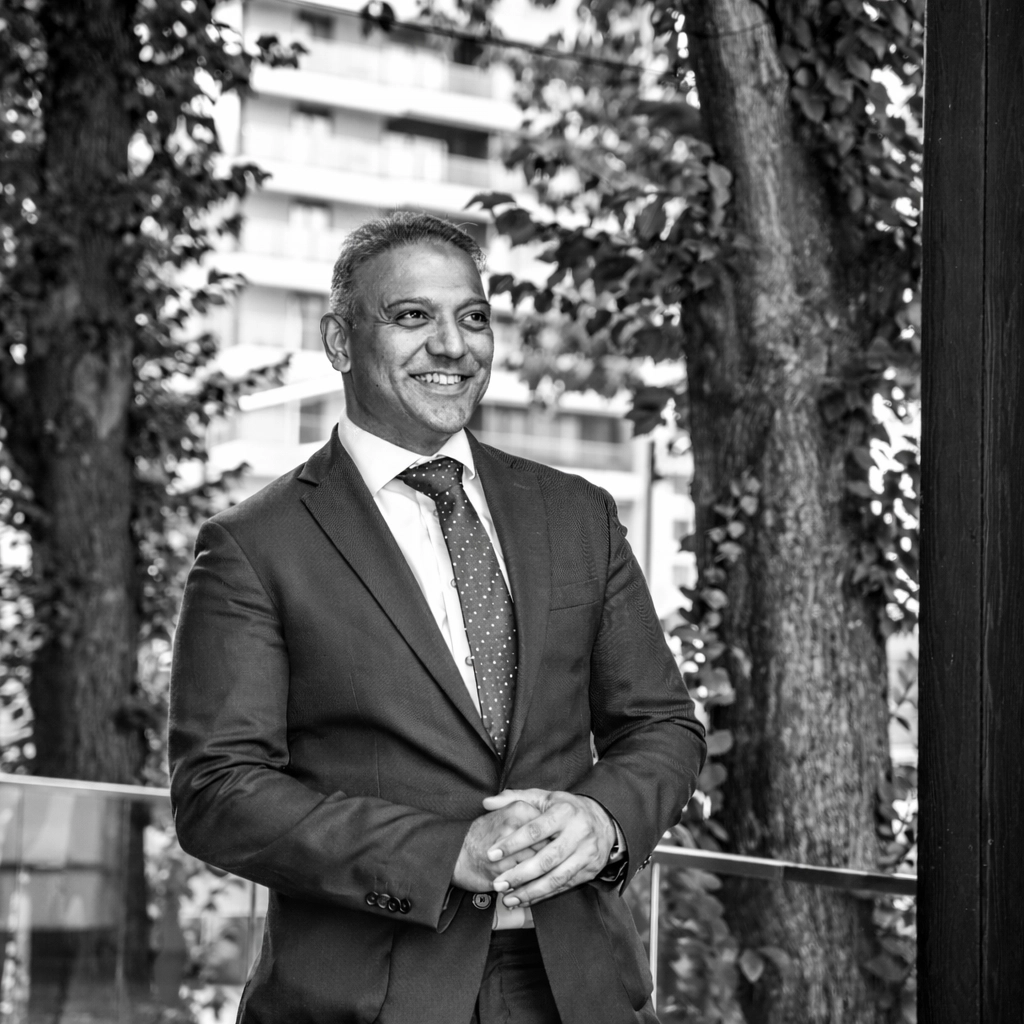
Mustafa Khan Managing Partner, Value Chain Management
Address: 30 Churchill Place Canary Wharf, London E14 5RE Email:mustafa.khan@valuechainmanagement.co.uk Phone: 0208 133 0757 | 0779 5533 608 Website:www.valuechainmanagement.co.uk
Comments